


When organisations begin planning a uniform program, one of the first decisions they face is sizing.
Should every employee receive a standard-sized uniform, or should garments be measured individually?
The answer is rarely as simple as choosing one approach over the other. The right solution depends on workforce size, employee roles, brand positioning, budget considerations, and operational requirements.
For businesses investing in corporate uniforms in UAE, understanding the advantages and limitations of both systems is essential before launching a large-scale uniform rollout.
Why Sizing Matters More Than Many Businesses Expect
Uniforms influence how employees feel throughout the workday and how the organisation is perceived by customers, guests, and stakeholders.
Even high-quality uniforms can appear inconsistent if sizing is poor.
Common issues include:
- Oversized garments that look untidy
- Restricted movement due to poor fit
- Frequent alteration requests
- Employee dissatisfaction
- Increased replacement and exchange costs
For organisations managing uniforms for large teams, sizing is not just an employee comfort issue—it is an operational consideration.
What Is Standard Sizing?
Standard sizing uses pre-determined size ranges such as XS, S, M, L, XL and beyond. Employees are assigned sizes based on measurements or fitting samples before production.
This is the most common approach for large-scale uniform programs.
Many businesses choose standard sizing because it:
- Simplifies production
- Speeds up delivery timelines
- Reduces administrative complexity
- Supports future reordering
- Makes inventory management easier
For companies requiring bulk uniform production in UAE, standard sizing is often the most practical option for operational teams and large workforces.
Advantages of Standard Sizing
Faster Production
Because garments are produced using established patterns, manufacturing timelines are typically shorter.
This is particularly useful when:
- Opening new locations
- Onboarding large numbers of employees
- Managing seasonal workforce increases
Easier Replacement Management
When an employee requires a replacement uniform, standard sizing allows businesses to reorder quickly without repeating measurement processes.
Lower Administrative Requirements
Large organisations often prefer standard sizing because it reduces the data they must collect and maintain.
Better Scalability
For businesses implementing scalable uniform solutions, standard sizing allows programs to expand without significantly increasing complexity.
Challenges with Standard Sizing
While practical, standard sizing has limitations.
Modern workforces are diverse, and employees do not always fit neatly into standard size categories.
Common challenges include:
- Inconsistent fit across different body types
- Frequent alteration requests
- Reduced comfort for customer-facing employees
- Presentation inconsistencies across teams
For organisations where appearance matters, these issues can become noticeable over time.
What Is Made-to-Measure Uniforming?
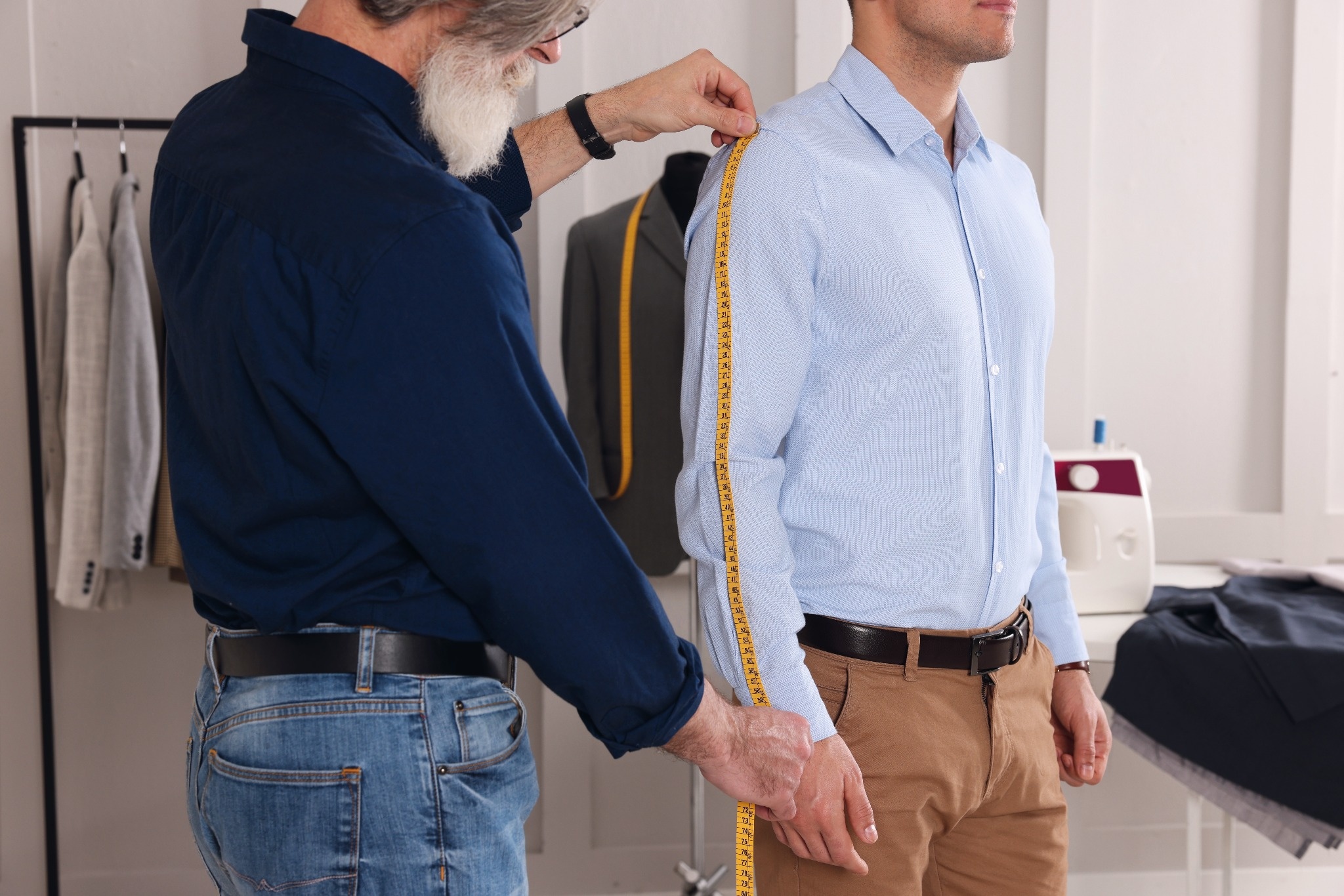
Made-to-measure uniforms in UAE involve taking individual measurements and adjusting garment patterns accordingly.
Unlike bespoke tailoring, made-to-measure uses an existing base pattern that is modified to suit the wearer’s measurements.
This approach creates a more personalised fit while remaining suitable for larger production runs.
Advantages of Made-to-Measure Uniforms
Improved Professional Appearance
Employees wearing garments that fit correctly present a more consistent and polished appearance.
This is particularly valuable for:
- Executive teams
- Front-office staff
- Hospitality professionals
- Client-facing employees
Greater Employee Comfort
Uniforms that fit properly are generally more comfortable during long working hours.
This can improve:
- Employee satisfaction
- Uniform adoption rates
- Confidence during customer interactions
Better Brand Representation
For companies investing heavily in custom uniforms in UAE, made-to-measure sizing helps ensure that the design performs as intended across different body types.
Challenges with Made-to-Measure Programs
Although made-to-measure offers significant benefits, it also introduces additional complexity.
Longer Lead Times
Measurement collection and garment adjustments require more planning than standard sizing.
Increased Administrative Management
Organisations must collect, store, and manage measurement data accurately.
Higher Production Costs
Individual garment adjustments naturally increase production time and cost.
More Complex Future Reorders
If employee measurements change, records may need updating before replacement garments are produced.
Which Approach Works Best for Large Teams?
In most cases, the answer is a hybrid approach.
Many successful uniform solutions for companies combine both systems.
For example:
Standard Sizing for Operational Teams
Often used for:
- Logistics staff
- Facility management teams
- Industrial workwear programs
- Back-office departments
These roles typically prioritise practicality, scalability, and ease of replacement.
Made-to-Measure for Customer-Facing Roles
Often used for:
- Front desk employees
- Reception teams
- Executive management
- Hospitality professionals
- Sales representatives
In these positions, presentation and fit have a greater impact on brand perception.
This combination allows businesses to maintain operational efficiency while improving presentation where it matters most.
Factors Businesses Should Consider
Before choosing a sizing strategy, organisations should evaluate:
Workforce Size
Larger teams often benefit from standardised systems with selective made-to-measure options.
Employee Turnover
High-turnover environments typically favour standard sizing due to easier replacement management.
Industry Requirements
Healthcare, hospitality, corporate, and industrial sectors all have different priorities.
Brand Positioning
Businesses that place a strong emphasis on presentation may benefit from incorporating made-to-measure sizing into specific departments.
Budget and Long-Term Costs
The decision should be evaluated based on total program performance rather than upfront production costs alone.
Why Proper Sizing Improves Uniform Program Success

One of the most common reasons uniform programs struggle is poor fit.
When employees feel uncomfortable or believe garments do not fit properly, adoption rates decrease and alteration requests increase.
A well-planned sizing strategy supports:
- Employee comfort
- Professional appearance
- Brand consistency
- Operational efficiency
For organisations implementing corporate uniforms in UAE, sizing should be considered during the planning stage rather than after production begins.
Final Thoughts
There is no universal sizing solution that works for every organisation.
Standard sizing offers efficiency, scalability, and easier management. Made-to-measure provides improved fit, comfort, and presentation.
For many businesses, the most effective approach combines both methods based on employee roles and operational priorities.
By choosing the right sizing strategy from the outset, organisations can create uniform programs that are easier to manage, more comfortable for employees, and better aligned with their brand standards.
At AttireCorp, we provide customised uniform solutions that combine professional design, accurate fitting, comfort, and functionality to meet the needs of diverse teams across the UAE.
FAQs
1. Are made-to-measure uniforms worth the additional cost?
For customer-facing roles and senior leadership teams, made-to-measure uniforms often improve presentation, comfort, and employee satisfaction, making the additional investment worthwhile.
2. How do large companies manage sizing for hundreds of employees?
Most organisations use structured fitting sessions, digital sizing records, and standard size frameworks. Some also combine standard sizing with made-to-measure options for selected departments.
3. Which industries benefit most from made-to-measure uniforms?
Hospitality, corporate offices, aviation, luxury retail, and executive teams often benefit most because appearance plays an important role in customer interactions.
4. Is standard sizing suitable for hospitality uniforms?
Yes, many hospitality businesses successfully use standard sizing. However, front-office and guest-facing roles may benefit from additional fitting adjustments to achieve a more consistent appearance.
5. Can businesses combine standard sizing and made-to-measure uniforms?
Yes. Many successful uniform programs use standard sizing for operational staff and made-to-measure sizing for customer-facing or leadership teams.
