


Airline uniforms have always held a certain allure, symbolizing professionalism, adventure, and global travel. But there’s more to these carefully designed ensembles than just aesthetics. From the golden age of aviation to the modern era, airline uniforms have evolved, reflecting changes in fashion, technology, and societal norms.

A Brief History: From Military Roots to Fashion Statements
Early airline uniforms in the 1920s and 30s often mirrored military attire, emphasizing discipline and authority. Pilots wore sharp, naval-inspired suits, while flight attendants, often former nurses, donned practical, modest dresses.
In the 1960s and 70s, as air travel became more glamorous and accessible, uniforms transformed into high-fashion statements. Designers like Pierre Balmain and Emilio Pucci created iconic, vibrant, and often daring looks for major airlines, reflecting the era’s optimistic spirit. Think bold colors, geometric patterns, and mini-skirts!
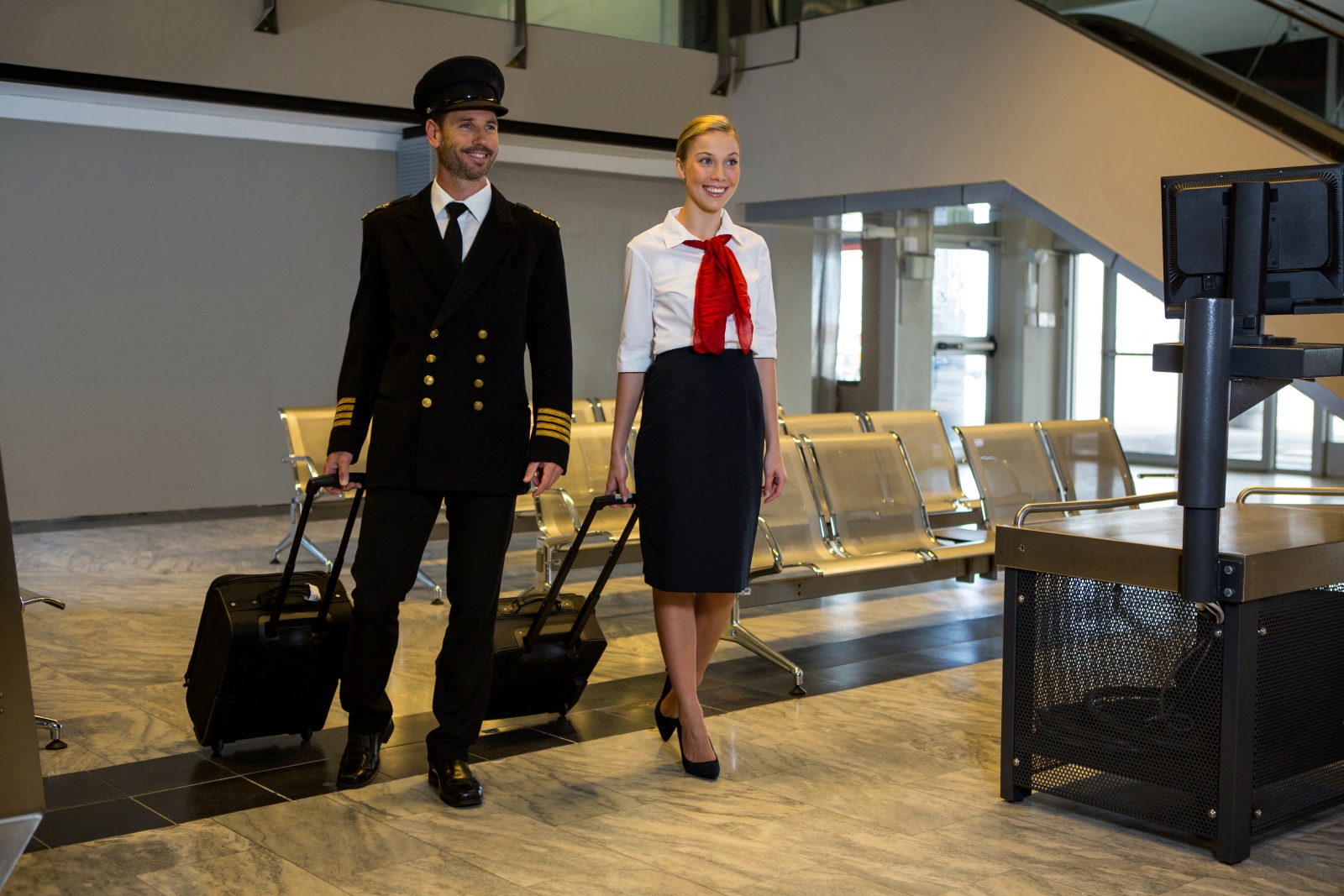
Modern Airline Uniform
Today’s airline uniforms balance style, comfort, and practicality. Here are the essential elements:
Pilot Uniform: The pilot’s uniform remains largely traditional, conveying authority and trust.
- Jacket: Typically a dark navy or black blazer, often double-breasted, with gold or silver buttons.
- Trousers: Matching dark trousers.
- Shirt: A crisp white shirt with epaulets (shoulder straps) displaying rank insignia.
- Tie: A solid dark tie.
- Hat: The iconic peaked cap with a brim, often adorned with the airline’s emblem and “scrambled eggs” (gold embroidery) for captains.
Flight Attendant Uniform (Cabin Crew Attire): This is where more variation and fashion-forward designs are often seen.
- Dress or Skirt Suit: Many airlines opt for a tailored dress or a skirt suit (skirt and blazer). Some also offer trouser options for comfort and versatility.
- Blouse: A blouse in a complementary color or pattern.
- Scarf: A silk scarf is a common accessory, adding a pop of color and elegance, often featuring the airline’s branding.
- Outerwear: A trench coat or tailored jacket for cooler weather.
- Shoes: Comfortable yet stylish low-heeled or flat shoes are crucial for long hours on their feet.
- Accessories: Name badges, often subtle jewelry, and sometimes gloves.
The Importance of Uniform Design
Airline uniform design is a complex process, considering several factors:
- Brand Identity: The uniform is a powerful visual representation of the airline’s brand, reflecting its values, quality, and style.
- Functionality and Comfort: Crew members spend long hours working in confined spaces, so uniforms must be comfortable, durable, and allow for ease of movement. Breathable fabrics and practical designs are key.
- Safety: Certain uniform elements, like non-slip shoes and fire-resistant materials, can be crucial for safety.
- Cultural Sensitivity: For international airlines, designs may need to consider cultural norms and sensitivities in different regions.
- Inclusivity: Modern uniform designs increasingly cater to diverse body types and offer gender-neutral options.
The Future of Airline Uniforms: Innovation and Sustainability
The airline industry is constantly evolving, and so are its uniforms. We’re seeing trends towards:
- Sustainable Materials: Eco-friendly fabrics and manufacturing processes are gaining traction.
- Smart Uniforms: Integration of technology, such as wearable tech for communication or health monitoring, could be on the horizon.
- Personalization: More options for crew members to express individual style within a professional framework.
Whether classic and understated or bold and contemporary, airline uniforms continue to capture our imagination, embodying the spirit of travel and the dedication of the aviation professionals who wear them. The next time you fly, take a moment to appreciate the “airline fashion” soaring at 35,000 feet!
